Wheat Penny Value: A Complete Guide by Date and Condition
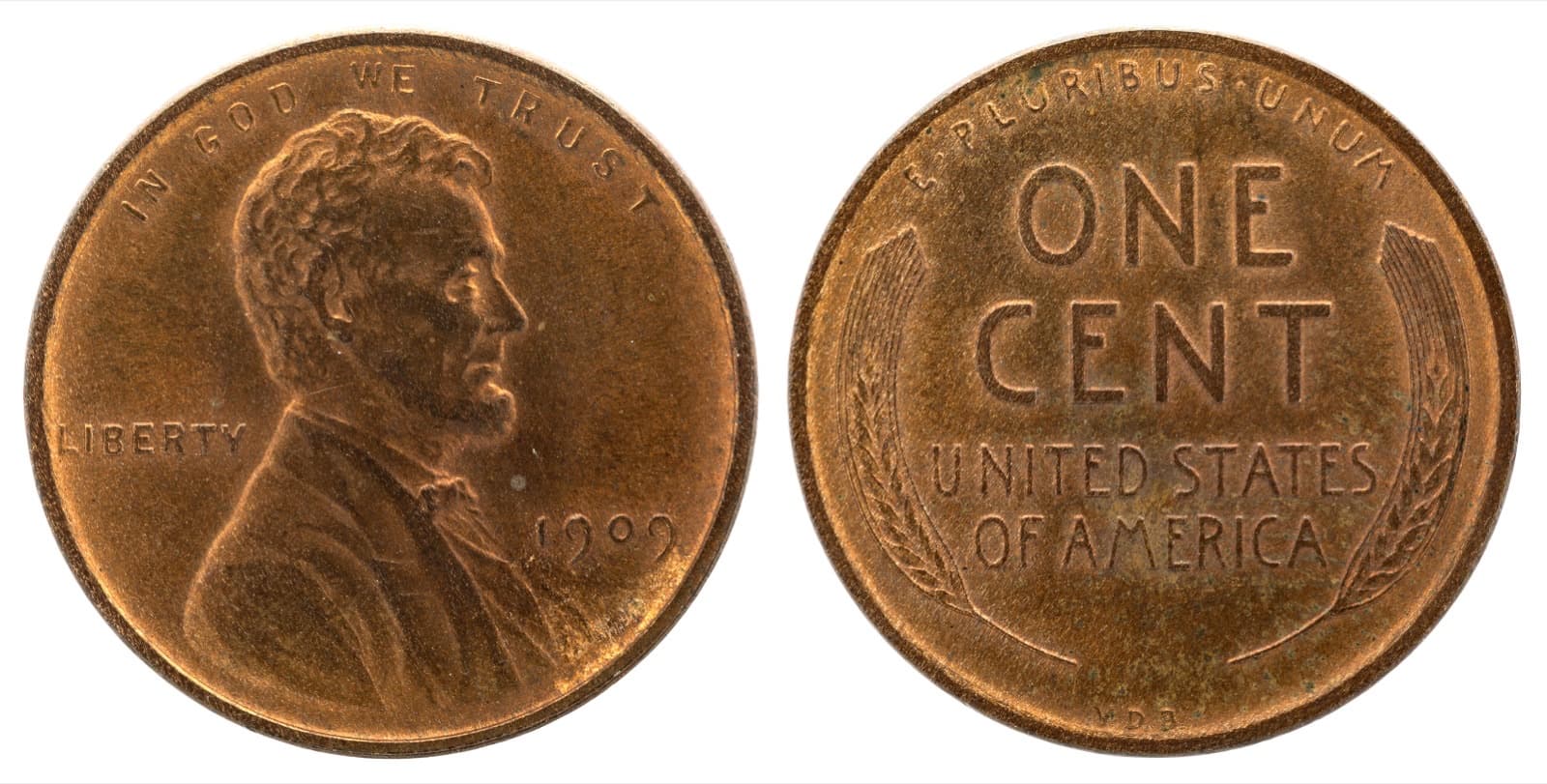
If you have old pennies with two wheat stalks on the back instead of the Lincoln Memorial, you are holding a wheat penny, officially the Lincoln Wheat Cent, minted from 1909 to 1958. Most people assume old means valuable. In reality, the vast majority of wheat pennies are worth just a few cents. But a small group of key dates and errors are worth hundreds, thousands, or in a few extraordinary cases well over $100,000.
Here is how to tell which one you have.
What wheat pennies are selling for right now
These are live eBay auctions for single Lincoln wheat cents, led by certified coins at the top of the market. Ordinary circulated examples sell for a few cents and are not shown here, so treat this as the ceiling rather than the norm. What a seller asks and what a coin finally sells for are also not the same thing.

PF68 RD CAM 1956 Lincoln Wheat Cent NGC a7740
$644Starting bid
Graded · ends Oct 17, 6:30 PM EDT

1955 Lincoln Wheat Cent PF69 RD NGC a8136
$644Starting bid
Graded · ends Oct 18, 6:28 PM EDT

1943-D Lincoln Wheat Cent MS67+ PCGS a5584
$601Starting bid
Graded · ends Oct 18, 6:00 PM EDT

1950-S NGC MS67 RED Lincoln Wheat Cent!! #B6157
$574Starting bid
Graded · ends Oct 14, 4:06 PM EDT

ERROR 1943-D Steel Wheat Penny MS-68
$500Starting bid
Graded · ends Oct 15, 11:52 PM EDT
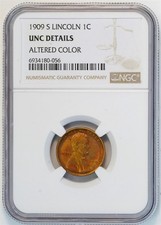
1909 S Lincoln Wheat Small Cent UNC DETAILS NGC 1C
$500Starting bid
Graded · ends Oct 18, 8:07 PM EDT
Live auction listings from eBay, refreshed daily. Asking prices and bids are what sellers and bidders hope to get, not confirmed sale values, and listings are not checked or endorsed by us.
What is a wheat penny?
The Lincoln Wheat Cent was introduced in 1909 to mark the 100th anniversary of Abraham Lincoln's birth. It was the first U.S. coin to feature a real president. The reverse shows two wheat stalks framing ONE CENT, which is where the nickname comes from. In 1959, the design changed to the Lincoln Memorial reverse, ending the wheat penny era.
Composition changed a few times along the way:
- 1909 to 1942 and 1947 to 1958: 95% copper (bronze)
- 1943: zinc-coated steel, due to wartime copper shortages
- 1944 to 1946: copper reclaimed from spent shell casings
Key dates: the wheat pennies worth real money
These are the dates every wheat penny hunter checks for first. Look for the date and mint mark (a small letter, D for Denver, S for San Francisco, or no letter for Philadelphia) just below the date on the front of the coin.
| Date | Mint mark | Circulated | Top uncirculated |
|---|---|---|---|
| 1909-S VDB | Mint markS | Circulated$950 - $2,500+ | Top uncirculated$15,000+ |
| 1909-S | Mint markS | Circulated$150 - $375 | Top uncirculated$3,500+ |
| 1914-D | Mint markD | Circulated$250 - $600 | Top uncirculated$10,000+ |
| 1922 No D | Mint marknone (error) | Circulated$600 - $1,500 | Top uncirculated$25,000+ |
| 1931-S | Mint markS | Circulated$85 - $150 | Top uncirculated$500+ |
| 1955 Doubled Die | Mint marknone | Circulated$1,200 - $2,500 | Top uncirculated$15,000+ |
These ranges are for informational purposes only and are not a professional appraisal or grading opinion. They reflect typical retail and auction sales, prices move with the market, and certified coins in the very highest grades sell well above these figures.
The 1909-S VDB is the single most famous wheat penny. It was struck for only a short time before the designer's initials (VDB) were removed from the coin due to public controversy, making it the lowest-mintage regular-issue wheat cent. Only about 484,000 were made.
Lincoln wheat penny value chart
If your coin is not on the key date list above, it is probably a common date. The chart below is the realistic range for ordinary circulated coins that are not key dates or errors. Uncirculated examples with sharp details and original color sit well above these figures.
| Era | Years | Typical circulated | Nice uncirculated |
|---|---|---|---|
| Early dates | Years1909 to 1933 | Typical circulated$0.10 - $1+ | Nice uncirculated$20 - $150+ |
| Mid dates | Years1934 to 1942 | Typical circulated$0.05 - $0.25 | Nice uncirculated$5 - $40 |
| Wartime copper | Years1944 to 1946 | Typical circulated$0.05 - $0.20 | Nice uncirculated$5 - $35 |
| Late dates | Years1947 to 1958 | Typical circulated$0.02 - $0.10 | Nice uncirculated$3 - $25 |
These ranges are for informational purposes only and are not a professional appraisal or grading opinion. They exclude key dates, semi-keys, and error coins. Prices move with the market.
Mint marks sit just below the date on the front of the coin. D means Denver, S means San Francisco, and no letter means Philadelphia (often searched as no mint mark). On common late dates such as 1957-D or 1958-D, the mint mark alone does not make the coin rare. Condition and errors still decide most of the premium.
What makes a wheat penny rare?
Age alone does not make a Lincoln wheat penny rare. Billions were struck over 50 years, and most dates survive in large numbers. A wheat penny is genuinely scarce when at least one of the following is true:
- Low mintage: few were struck in the first place, such as the 1909-S VDB or 1931-S.
- Poor survival in high grade: common in worn condition, but scarce with sharp details and original mint color.
- A minting error or variety: doubled dies, missing mint marks, or the wrong metal planchet.
If your coin is a common date in average circulated condition, it is almost certainly worth only a small premium over face value, even if it looks old.
Semi-key dates worth checking
Semi-keys are scarcer than average common dates, but not in the same league as the true keys. In worn condition they often bring a few tens of dollars. Sharp uncirculated examples can run into the low hundreds.
| Date | Why it matters | Typical circulated |
|---|---|---|
| 1909 VDB | Why it mattersFirst-year design with initials | Typical circulated$10 - $25 |
| 1911-S | Why it mattersLower San Francisco mintage | Typical circulated$30 - $75 |
| 1914-S | Why it mattersScarcer S-mint early date | Typical circulated$25 - $60 |
| 1924-D | Why it mattersLower Denver mintage | Typical circulated$30 - $80 |
| 1926-S | Why it mattersTough S-mint in nice grades | Typical circulated$20 - $50 |
Other semi-keys collectors also watch include 1913-S, 1915-S, 1916-S, 1921-S, 1925-S, 1928-S, and 1929-S. Ranges are for informational purposes only.
Wartime wheat pennies (1942 to 1946)
Searches for 1942, 1944, 1945, and 1946 wheat penny value are common because these years sit around the famous 1943 steel cent. Most wartime copper cents are still common. Here is what actually matters.
- 1942: still standard bronze composition. Common in circulated grades, with premiums mainly for clean uncirculated coins.
- 1943: the steel cent year. Silvery color, magnetic, and covered in detail on our dedicated guide.
- 1944 to 1946: copper again, partly from recycled shell casings. Ordinary no-mint-mark (Philadelphia), D, and S examples are usually worth only a small premium when worn.
- 1944 steel penny: an extremely rare error struck on a leftover steel planchet after the Mint switched back to copper. Do not confuse it with a common copper 1944.
If your wartime penny is dated 1943, or looks steel when it should not, read the 1943 steel penny value guide
Error coins: where the big money is
A handful of wheat pennies are not valuable because they are old or scarce. They are valuable because something went wrong at the Mint. These are the coins behind most penny found for a fortune headlines:
- 1943 bronze or copper penny: struck on leftover copper planchets instead of wartime steel blanks. Only a couple dozen are confirmed to exist, and examples have sold for over $1 million.
- 1944 steel penny: the reverse mistake, a coin struck on a leftover steel planchet after the Mint switched back to copper. Extremely rare and valuable.
- 1955 doubled die obverse: dramatic, easy-to-see doubling in the date and lettering. Worth $1,000 or more even in worn condition.
- 1958 doubled die obverse: one of the rarest wheat cent varieties, with an auction record over $300,000.
- 1922 No D: a Denver-struck coin missing its mint mark due to a worn die. Easily confused with cheaper varieties, so verification matters.
If your coin shows doubling in the text, an unusual metal color, or does not match a normal date and mint combination, take a closer look before assuming it is common.
What actually determines value
Four things, in order of impact:
- Date and mint mark: this determines whether you are even in key date territory.
- Condition: a worn, common-date wheat penny might be worth 3 cents. The same date in crisp uncirculated condition with original red-copper luster could be worth $20 to $50 or more.
- Errors or varieties: doubling, off-metal strikes, and repunched mint marks can multiply value dramatically regardless of date.
- Color designation (for uncirculated coins): graders classify copper coins as Red (RD), Red-Brown (RB), or Brown (BN). Full Red coins, which retain their original mint color, command the highest premiums.
Quick self-check
- Find the date and mint mark below the date.
- Compare it against the value chart, key dates, and semi-keys above.
- If it is a 1942 to 1946 coin, check metal color and whether a magnet sticks.
- Check the surface for doubling in the lettering or date.
- Look at overall condition: sharp details and original color versus heavy wear.
- If it is a key date, an error, or looks uncirculated, do not clean it. Cleaning destroys value. Set it aside for grading or expert evaluation.
Not sure what you have?
With 50 years of dates, mint marks, and error varieties to track, it is easy to misidentify a wheat penny, or overlook one that is actually valuable.
Snap a photo and get a read on the date, mint mark, and condition in seconds, so you know whether it is a common cent or something worth holding onto.
- One coin
- Good lighting
- Fill the frame
- Plain background
Common questions
- How much is a wheat penny worth?
- Most circulated wheat pennies are worth 2 to 10 cents each. Key dates, uncirculated coins, and error varieties can be worth tens, hundreds, or thousands of dollars depending on the date and condition.
- What years are wheat pennies?
- Lincoln wheat cents were minted from 1909 through 1958. In 1959 the reverse changed to the Lincoln Memorial design.
- What makes a Lincoln wheat penny rare?
- Low mintage, poor survival in high grades, or a genuine mint error. Ordinary circulated common dates are not rare, even when they are decades old.
- How much is a 1944 wheat penny worth?
- A typical circulated 1944 wheat penny is usually worth about 5 to 20 cents. Uncirculated examples bring more. A 1944 struck on steel is an extremely rare error and should be authenticated before you assume anything.
- What is the most valuable wheat penny?
- Among regularly issued dates, the 1909-S VDB is the most famous and typically the most valuable. Certain error coins, including the 1943 bronze cent and the 1958 doubled die, have sold for far more at major auctions.
- How do I find the mint mark on a wheat penny?
- Look just below the date on the front of the coin. A D means Denver, an S means San Francisco, and no letter means Philadelphia.
- Should I clean my wheat pennies?
- No. Cleaning removes original surfaces and leaves marks that collectors and graders spot immediately. A cleaned coin is worth less than the same coin left alone.
- Are all wheat pennies valuable?
- No. Billions were struck over 50 years, and most common dates in worn condition sell for only a few cents. Value concentrates in key dates, high grades, and genuine error coins.
Scan coins on your iPhone
Identify coins from photos wherever you find them - at estate sales, in change jars, or out with a metal detector.

Free on the App Store
Last reviewed August 2026. Values are estimates for informational purposes only, not a professional appraisal or grading opinion.